How a Construction T-Level Helped Finley Find His Career
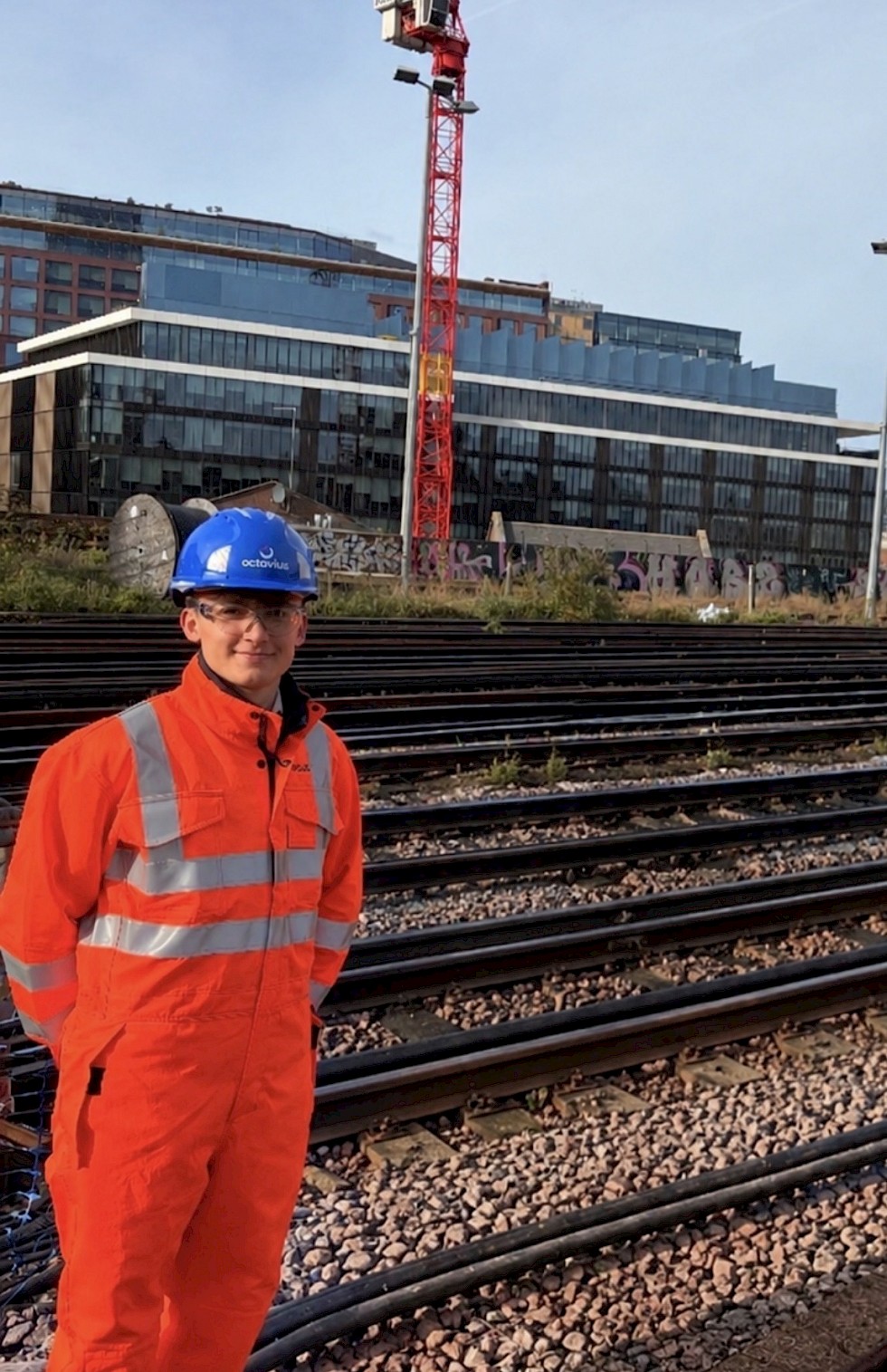
Finley Dyson’s T-Level placement with Octavius Infrastructure has opened the door to a career in construction. After impressing the team during his placement, he was offered the opportunity to stay with the company and progress onto a degree apprenticeship in project management.
Finley joined East Sussex College from The Cavendish School, knowing he wanted to pursue a career in construction.
He chose the College’s Eastbourne because it offered the T-Level in Construction: Design, Surveying and Planning, giving him the chance to develop industry knowledge while gaining practical experience in the workplace with a substantial 315-hour industry placement.
While a more practical construction course might focus on developing hands-on building skills, Finley liked the idea of learning about the wider construction industry, looking at how projects are planned, managed and delivered.
He chose the Construction: Design, Surveying and Planning T-Level, and during the course’s industry placement, he worked with Octavius Infrastructure, a transport and infrastructure maintenance company in London.
Finding the right career path
When Finley started his T-Level, he initially thought he wanted to become an architect. However, learning about the different roles within construction, alongside site visits and practical experience, introduced him to opportunities he had not previously considered.
He said: “The course gave me an insight into a lot of roles within the industry, this opened my eyes to a lot of roles, such as a Project Manager, which is what I am working towards now.”
Through a connection with Octavius Infrastructure, he secured his industry placement and began working in the Electrical and Power team within the company's rail division.
He travelled to London each week, gradually increasing his time with the company as his college studies progressed. Starting with one day a week, he moved to two days after Christmas and then three days a week once college finished.
Learning from real construction projects
Finley got a great insight into a real working environment, and ultimately discovered his interest in project management and the career path he wanted to pursue.
At the start of the placement, he rotated between different functions in the Electrical and Power team. This helped him understand the different responsibilities involved in delivering projects and build relationships with colleagues both in the office and on site. For the final few months of his placement, he knew project management was for him, so he spent time working closely with a Project Manager, attending meetings, preparing documents and presentations, and helping with day-to-day tasks.
“The knowledge I gained at college helped me make sense of the conversations and terminology everyone was using at work,” he said. “Octavius works in a complex part of construction, so I needed to have the confidence to talk to people and ask questions if I was unsure. Being able to do that was really good for me and my development.”
A placement that led to a career opportunity
Finley's hard work during his placement led to an opportunity to continue with Octavius Infrastructure after his college studies.
His manager had told him he’d helped change perceptions of younger people entering the workplace and set a new standard for future placements and they were delighted to offer him the chance to start a degree apprenticeship.
“It felt great to be offered the opportunity to continue with the company and work towards my degree apprenticeship,” he said. “Octavius is a company that cares about its people and their development and progression.”
Balancing university with life on site
Finley started his degree apprenticeship earlier this year and he’s gaining even more insight into both the planning and practical delivery of construction projects.
Some days are spent in the office, helping to plan site access, road closures and rail possessions, scheduling meetings and supporting project coordination. On others, he is on site, helping manage deliveries, checking documentation and keeping the Project Manager informed about the work taking place.
When he is at university, his modules cover areas including scheduling, budget and commercial management, procurement, risk, quality, governance and sustainability. His assignments link directly to the workplace. He can choose projects from his own organisation, explore why things are done in a particular way and suggest improvements.
This connection between university study and practical experience is one of the aspects he values most about the degree apprenticeship.
Why Finley recommends a T-Level
Looking back, Finley believes his T-Level played a crucial role in helping him secure his current opportunity.
“Honestly, I don't think I would have got a degree apprenticeship without this T-Level,” he said.
He believes the placement gave Octavius Infrastructure the chance to see how he worked and what he could contribute before committing to a longer-term apprenticeship.
It also helped him make a more informed decision about his future, rather than choosing a university course without being certain which career he wanted to pursue.
Finley was particularly keen to recognise the College’s careers advisor, Mandy, for her support throughout the process, including the initial communicating with Octavius Infrastructure, helping organise the placement and guiding him through the experience.
His advice to other young people considering their options after GCSEs is to keep an open mind and make the most of the opportunities available.
“You don't know what something is like until you try it. A T-Level gives you a chance to actually try real world industry experiences, while studying.”
For Finley, that experience did more than develop his construction knowledge. It helped him identify the career he wanted, build relationships with an employer and take his first steps towards becoming a project manager.
Find out more about T-Level Construction: Design, Surveying and Planning.