“I Didn’t Imagine Studying Music Would Lead Me to California – I Just Knew I Loved Music”
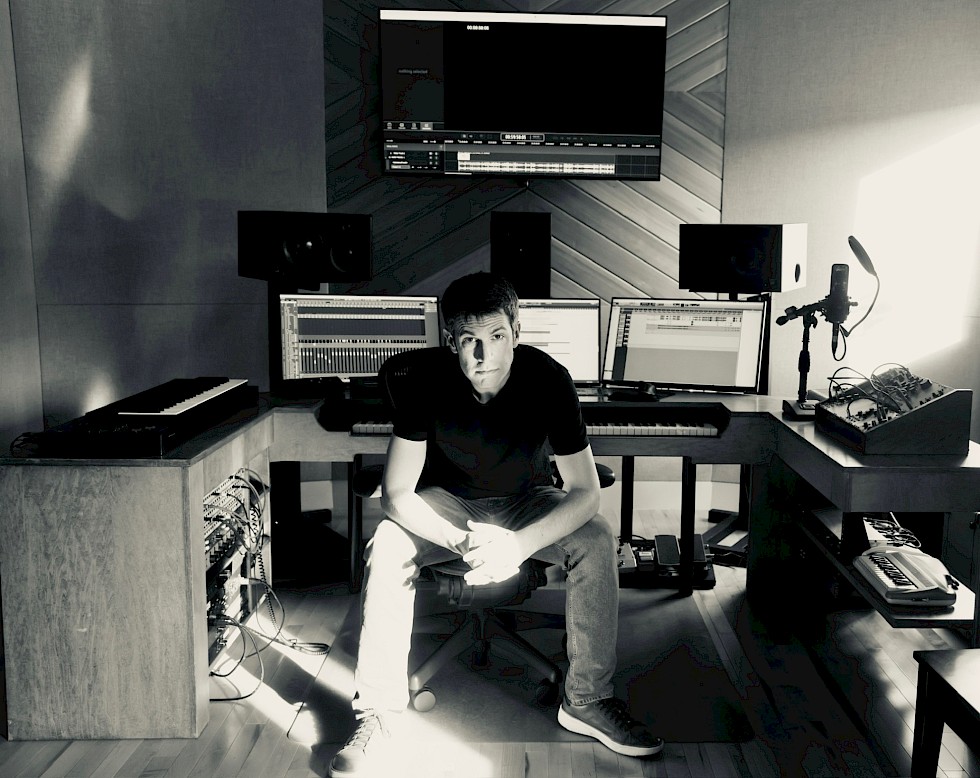
Christopher Willis’ Musical Journey from College to Cambridge to Cali
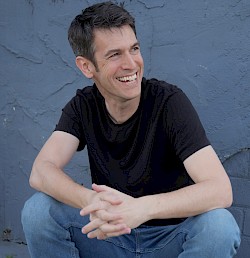
Christopher Willis is an East Sussex College alumnus and composer whose career has taken him from studying A-Level Music at Lewes to working across film, television, animation and games.
I took the double Music A-Level at the old music school in Lewes, plus Maths at the main Lewes campus. At that stage of my teens, I’d loved music for many years, but I was just starting to comprehend what it might be like to have some kind of career in music.
 Coming to Lewes meant being around other musicians all the time, living and breathing it. It was a great way to find out if this was something that felt viable – not only intellectually, if you like, but socially, culturally.
If I think about my life now, even though I’m now thousands of miles away in California, I’m still among musicians most of the time, they’re my people, as it were, and that’s been a constant ever since I was at college.
Finding confidence through performance
I was lucky to be at the college at a time when some fairly ambitious projects were being mounted. One of those was a gala concert at the Royal Albert Hall, at which I played the solo piano part in Constant Lambert’s The Rio Grande for piano, choir, and orchestra.
A friend of mine played a recorder concerto at the same concert. I saw her backstage afterwards, and I think we were both slightly in disbelief – we couldn’t quite believe that we’d both made it through it unscathed.
And that really boosted my confidence about the future.
The tutors who helped me progress
My two maths teachers come immediately to mind. I admired both of them hugely. The two halves of the maths A-Level gave rise to very different experiences. Discrete maths, taught by a man named Dudley Ward, was the easier of the two for me. Dudley made it tremendously fun, like we were just doing a bunch of brain teasers.
Pure maths, on the other hand, tripped me up – around the mid-point of the A-Level, I was still really struggling with calculus, partly because I’d been so distracted by music.
This became a bit of a crisis for me, because I had an offer from Cambridge to read Music, but I needed an A in Maths, and in the mock Pure Maths exam, I got an N.
I needed a Rocky-montage level of improvement over the next few months. The teacher was a very patient, very level-headed man named Peter Gwilliam. Between us we got there: I got the A, and I did indeed head up to Cambridge that autumn.
Developing as a composer
It’s hard to fathom how much I’ve changed. I wasn’t really writing music at all back then; and I’ve definitely racked up my 10,000 hours at this point.
It ought to be some comfort that I had so many burning questions about music at that age, about theory, about how things work, and I actually do know some of the answers now.
I can write a fugue now, say, or a big band chart. But the truth is that I still feel restless and ignorant in exactly the same way as I did then.
Finding opportunities in film, television and games
That development has continued throughout my career, taking me into some very different areas of music.
 My biggest break, for which I’ll be forever grateful, was to get a job with film composer Rupert Gregson-Williams in his studio in LA.
I was overqualified in some ways and woefully unqualified in others: I had a string of music degrees, but I had next to no experience with music production or scoring to picture. However, Rupert decided to take a chance on me and gave me a job, and that completely changed my fortunes.
Approaching each creative challenge
That variety has also meant learning how to approach each project in a different way.
I often find the very start of a project quite hard; I just have to try to accept that it’ll be slow at first.
The first thing to figure out is the overall vibe, style etc. I’ll compose a bunch of sketches, and also listen to other music, and make notes.
I try to alternate between coming at the problem intellectually and coming at it instinctively.
Second is to write at least one theme, even if the project is not likely to be very melodic. My little zen koan on this is that every project needs a main theme, even if you never hear it.
After that, on old-school orchestral projects, I’m very big on mapping it out. I like to sketch the music very roughly on the piano before trying to orchestrate it.
I might map an entire episode of TV, say, before programming any of the orchestra. If the project is less orchestral and more oriented around sound design, though, then the piano-map approach breaks down.
Adapting to different projects
I’ve worked on very different projects such as Veep, The Death of Stalin and Disney animation, and each one brings its own creative challenges.
Again, I’ll alternate between different mindsets. Although this might sound like the opposite of conventional wisdom, sometimes I tell myself that there is in fact one right way to do it.
I’m trying different harmonies and styles, with my eyes literally on the film, and not letting my fingers go anywhere that isn’t resonating with what’s on the screen.
But then it may be fun to just try things that are very leftfield and see if anything sticks.
 Learning from unexpected projects
The most unexpected project I’ve worked on would have to be Mickey & Minnie’s Runaway Railway, which is a large ride-through attraction at Disneyland and Disney World.
A big attraction is similar in scope to a movie production, and takes a long time. The experience taught me a lot about how to adapt my ways of thinking to new situations, but also taught me not to be too thrown off by things that are only ostensibly new and different.
Advice to my younger self
If I could give my younger self one piece of advice, it would be this: “Things not worth doing are not worth doing well”.
You can spend hours – or in some cases, years – doing the wrong thing because the desire to do it stops you stepping back and asking what the point of it is.
I think that’s something I’ve become more aware of as my career has developed.