Why study geography when the world is changing so quickly?
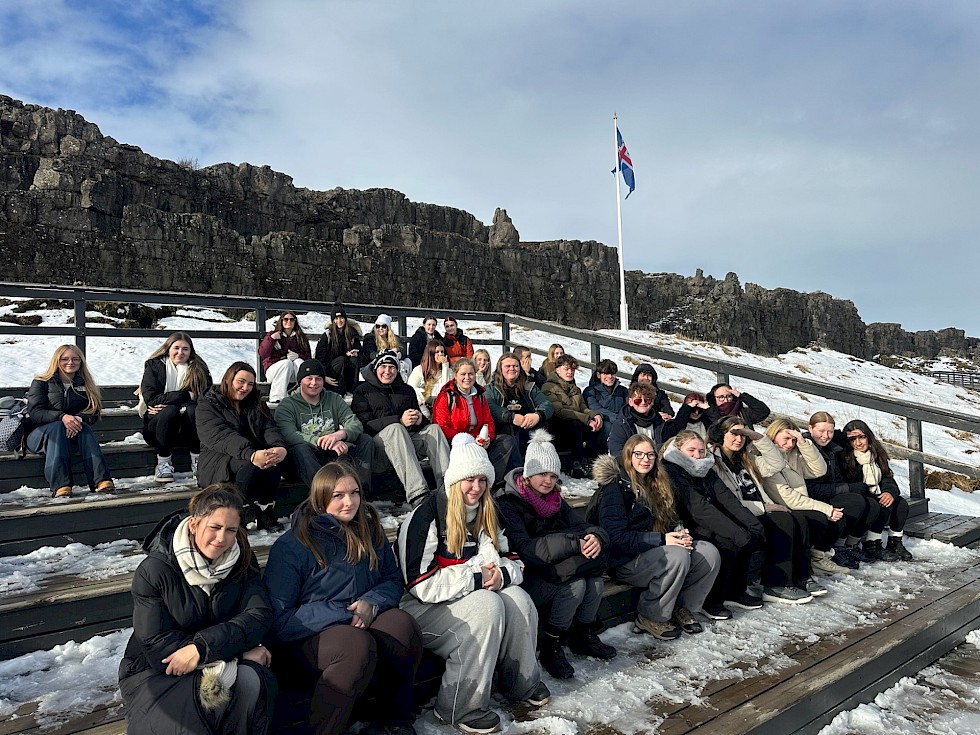
Climate change, extreme weather, growing cities, migration and how we use the planet's resources are all changing the world around us. Geography helps us understand what's happening – and what we might do about it.
When you think of geography, you might think of maps, countries, rivers and mountains.
But there's a lot more to it than that.
Geography is about understanding the world around you – from the physical processes that shape the planet to the people, communities and cities that live on it.
And with the world changing so quickly, there is plenty to understand.
It's not just about maps
Geography brings together two sides of the world: the physical and the human.
You might study how rivers cause flooding, then look at how that flooding affects the people living nearby.
You could explore climate change, water shortages, population growth, globalisation or why some places have developed differently from others.
It's about asking questions such as:
- Why are some places more affected by climate change than others?
- Why do people move from one place to another?
- How should cities respond as their populations grow?
- How can we use the planet's resources without damaging them?
There isn't always one simple answer.
That's what makes geography interesting.
You might be surprised by how much technology is involved
Forget the idea that geography is just colouring in maps.
Modern geographers use computers, statistics, satellite images and digital mapping to understand what's happening in different places.
One example is Geographic Information Systems, or GIS. Put simply, GIS lets you collect information about places and use it to create maps that show patterns and help solve problems.
It can be used to map areas at risk of flooding, plan transport routes, monitor environmental changes and help decide where new buildings or services should go.
The Royal Geographical Society highlights the use of geographical data and mapping across areas including environmental management, transport, planning and business.
So if you like geography but also enjoy data, technology or solving problems, there's plenty to get stuck into.
You don't just learn geography in a classroom
One of the best things about geography is getting out and seeing what you're studying for yourself.
Fieldwork gives you the chance to visit places, collect your own information and then work out what it tells you.
At A-Level, you'll carry out fieldwork in both physical and human geography, as well as an independent investigation where you develop your own research question and investigate it. That could mean looking at a river, studying how a town is changing or investigating how people use a particular area.
Instead of just being told what is happening, you get to find out for yourself.
Why does geography matter now?
Look at the news and you'll find geography everywhere. In Sussex this summer, a long period of hot, dry weather put pressure on water supplies. On 21 July 2026, the Environment Agency moved Sussex into a state of prolonged dry weather, with low rainfall and high demand for water affecting the region. Just four days later, a temporary use ban – more commonly known as a hosepipe ban – came into force across Sussex.
It's a simple example of how physical and human geography are connected. Weather and rainfall affect rivers, reservoirs and groundwater, while the way people use water affects demand and how resources need to be managed.
And it's not just water. Flooding, wildfires, climate change, new housing, transport, population growth and changes to our coastline are all geographical issues. Understanding these issues means understanding both the physical world and the people living in it.
And these are problems that need people who can look at evidence, spot patterns and think about how different things are connected.
The Royal Geographical Society says geographers are working on issues including extreme weather, environmental planning, biodiversity and making transport, buildings and food production more sustainable.
So, where could geography take you?
You don't have to become a geography teacher.
Geography can lead into careers in environmental work, conservation, town planning, transport, tourism, international development and digital mapping.
You could work with environmental data, help plan new developments, analyse flood risks or use mapping technology. UCAS also highlights skills developed through geography including research, data analysis, planning, communication and problem-solving.
And those skills can be useful in lots of careers that aren't obviously connected to geography.
Could geography be for you?
Geography could be a good choice if you're curious about what's happening in the world and want to understand why.
Maybe you're interested in climate change. Maybe you like learning about different places and cultures. Maybe you enjoy science but also want to understand people and society.
Or maybe you're not sure what you want to do yet.
That's OK too.
Geography gives you the chance to explore lots of different topics while building skills that can be useful well beyond the subject itself.
What could you study alongside geography?
Geography works well alongside lots of other subjects, depending on what interests you and where you might want to go next.
Interested in the environment and the natural world? Environmental Science and Biology can complement geography and give you a deeper understanding of ecosystems, climate and the processes that shape our planet.
More interested in people and society? Sociology and Philosophy can help you explore some of the human questions behind the issues you study in geography.
Thinking about business and economics? Business and Economics can give you another way to understand how places, economies and organisations work.
Or, if you're interested in different countries, cultures and travel, you could combine geography with French, German, Spanish or Travel and Tourism.
There's no one right combination. Think about what interests you, what you might want to do after college and the subjects you'd enjoy studying.
Interested in finding out more? https://www.escg.ac.uk/search/?q=geography