Art & Design Students Awarded Honorary Fellowships Following Textile Project at East Sussex College
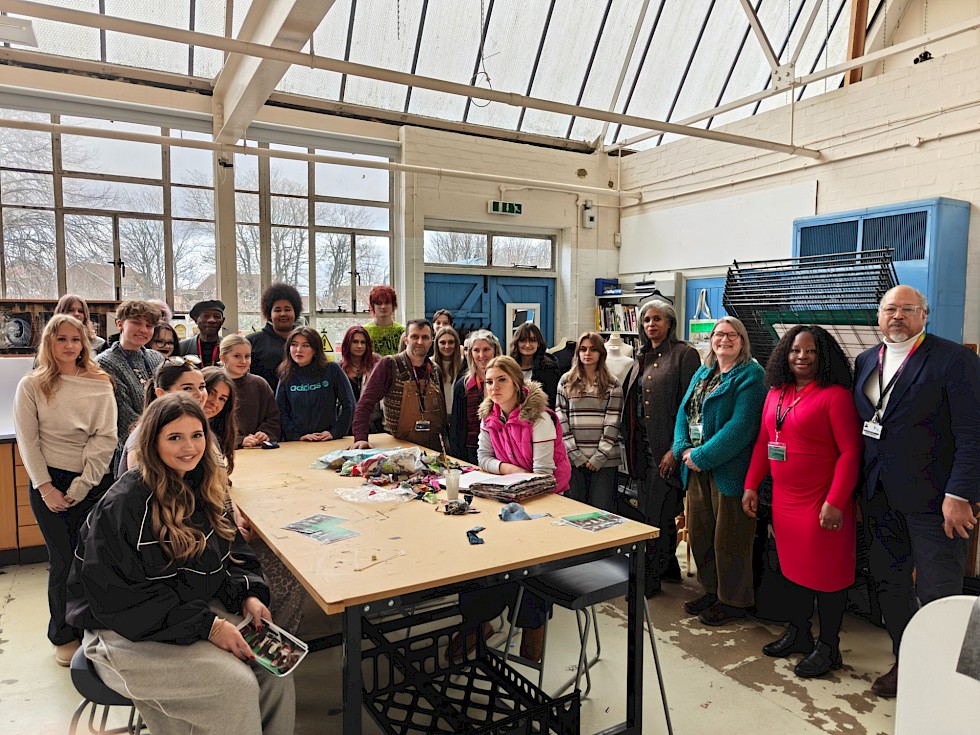
Level 3 Art & Design Extended Diploma students at East Sussex College’ Lewes campus have been awarded Honorary Fellowships of the West India Committee in recognition of their powerful fine art textile project exploring the history of the British West Indies Regiment (BWIR).
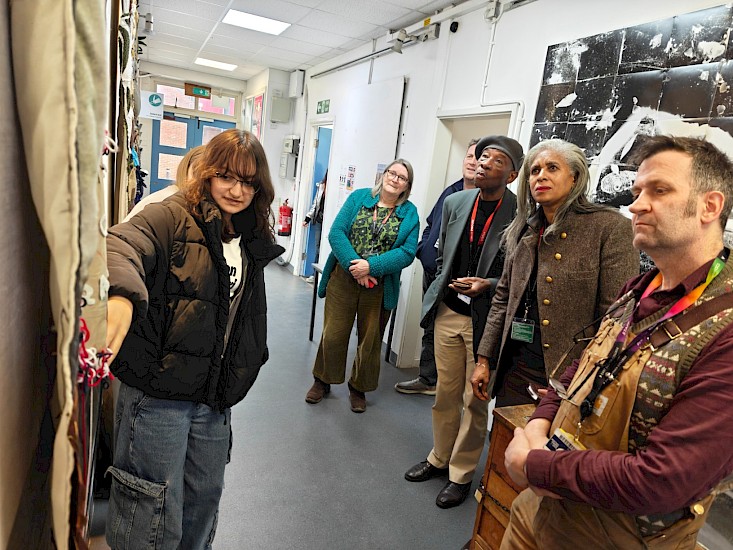
Blondell Cluff CBE, Councillor Edwina Livesey, District Councillor Janet Baah and Joel Stewart were invited to the college on Thursday 12th February to see the students’ work first-hand.
After hearing about the project, speaking with students about their research and creative process, and viewing the inspiring series of large-scale textile banners responding to the often overlooked Caribbean contribution to the Great War, Blondell praised the group for their work.
She also announced that she would be awarding both students and staff Honorary Fellowships of the West India Committee.
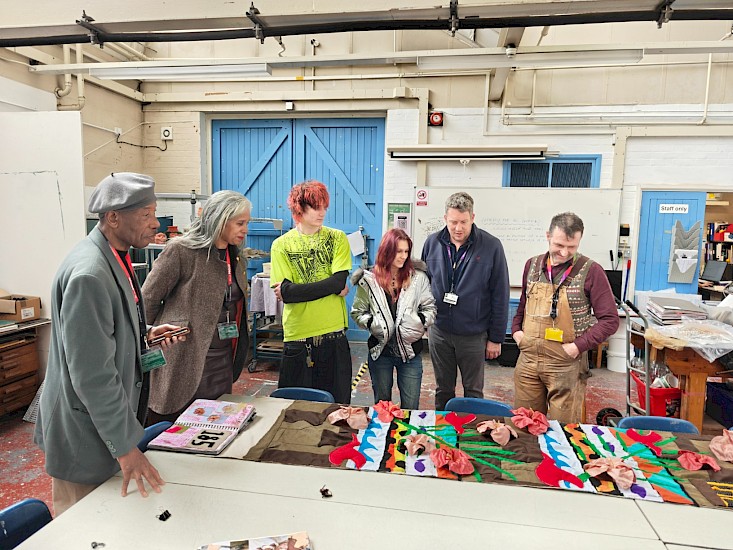
Since November, students have worked collaboratively to research, design and produce the banners as part of the college’s Festival of Futures programme - a connected series of experiences designed to help learners explore what’s possible and understand how their skills and interests can shape their future.
The art project forms part of the Creative Futures strand, demonstrating how creative education can lead to meaningful, real-world outcomes.
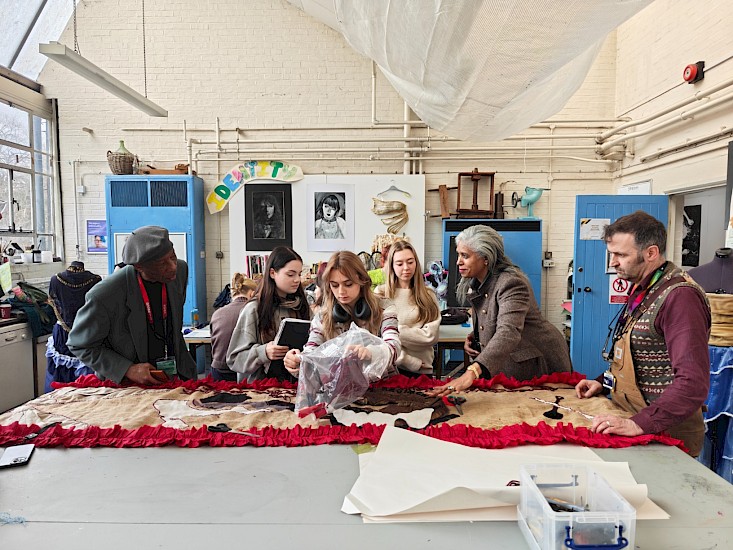
Speaking to the students, Blondell Cluff CBE outlined the historic significance of the West India Committee before making a landmark announcement:
“The West India Committee was founded in the City of London in 1735… We were granted a Royal Charter in 1904 for the work we’ve done for the region, and that Royal Charter means we can grant fellowships.
“These are quite powerful honours, because they are recognised as the lowest form of official honour in Britain. I’m now here to grant each and every one of you a fellowship. After your names, you will have the letters FWIC - and that means you will hold an honorary position for life.
“We are so proud of what has been done here. You have commemorated people who needed to be remembered - not forgotten - and honoured them through this work. All of you, including your wonderful teaching staff, are now honorary fellows of the West India Committee.”
 The fellowship, granted under Royal Charter, represents a nationally recognised honour and marked a significant moment of achievement for the students and staff involved.
Reflecting on the project, Art & Design student Caitlyn Petrie said, “It’s been such an interesting project. I’ve learnt a lot of new skills I didn’t have before, like sewing, and it’s been nice using our skills to represent something that’s really underrepresented and hasn’t had much recognition in the media. It’s also been really interesting speaking to Blondell and Edwina and hearing what they have to say, and about our project and the banners.”
Councillor Edwina Livesey praised both the technical ambition and emotional depth of the work, telling students:
“I’m so blown away by the way the students have thought through this project. They haven’t just done the easiest thing - it’s actually quite difficult. There’s that really beautiful discovery of technical skills that you can see as a journey… it’s got a wonderful, living texture to it - an artistic journey with great technical skill, but also the love behind it.
“And this isn’t just history - it’s still happening. These mistakes are still being made. People’s lives are still being ruined, and people’s talents are still not being valued. So this carries a powerful message. I’m just incredibly proud to have been part of something so wonderful.”
James DiBiase, Art & Design Course Leader at East Sussex College, explained the educational depth behind the project:
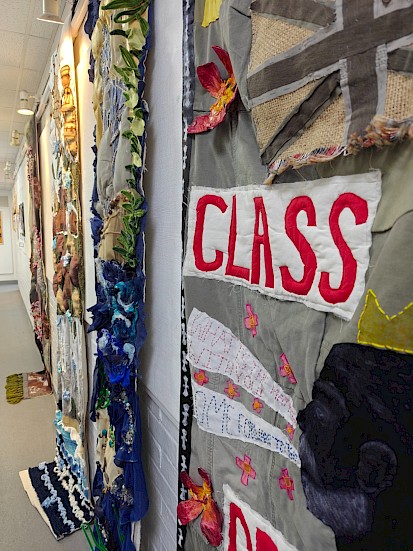
“Since November, students have worked collaboratively to produce a series of large-scale textile banners in response to the powerful and often overlooked history of the British West Indies Regiment and the wider Caribbean contribution to the Great War. Across a number of themed chapters, the students have explored the hopes and ambitions of Caribbean men and women whose lives were shaped by the Great War, the discrimination they faced, and their resilience, dignity and contribution.
“The standard of work has been consistently strong, culminating in thoughtful and visually compelling outcomes, demonstrating how creative practice can powerfully engage with complex histories beyond the studio and within the wider community.”
Special thanks goes to tutors Rene de Lange, Jackie Field, Julie van Ackeren and James DiBiase for their hard work, encouragement and ongoing support throughout the project, and for the vital role they played in guiding students from initial research through to the final exhibition-standard outcomes.
The banners are now expected to be displayed publicly, with discussions underway for exhibitions in Lewes and Seaford, as well as at All Hallows in the Wall Church in London. The church has committed to incorporating the banners into a memorial service, with hopes they will also be displayed as part of Armistice Day commemorations later this year.
For the students, the project has delivered more than technical development. Through research, collaboration and public-facing creative work, they have engaged directly with national history - and, through their newly awarded Honorary Fellowships, become formally recognised contributors to its remembrance.
Projects like this reflect the purpose of East Sussex College’s Festival of Futures - building confidence, developing professional-level skills and demonstrating how education can connect directly to impact beyond the classroom.