I've exhibited at performances at festivals across Europe - here's how I got there
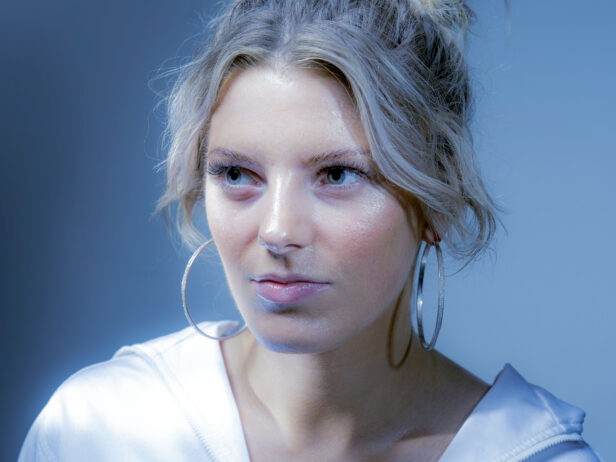
Laura Eager, alumni and multidisciplinary artist now based in Amsterdam.
When I get too serious, I try to go back to the play and unpredictability to allow something exciting or unknown to come out again.
I studied the Art Foundation Diploma Level 3 at East Sussex College before going on to live and work in Amsterdam as a multidisciplinary artist.
East Sussex College taught me to go outside my comfort zone, especially when it came to experimenting across mediums. I joined after my A-Levels and saw myself as a painter, and soon found a new love for film, performance, sculpture and installations.
I had permission to try things without fear. I think that really guided this playful, chaotic approach to creating, where I was pushed to question concepts, take risks, and test ideas at a fast pace.
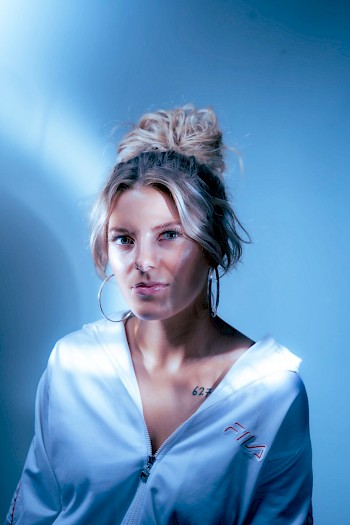 Often I think these values underpin my methods today. Especially when I get stuck in concepts or become too serious, I try to go back to the play and unpredictability to allow something exciting or unknown to come out again.
One experience I won't forget was a drawing and painting exercise we had. It started with us at our own easels creating drawings, but after a while of refining and perfecting our outcomes, we were suddenly asked to start switching places with other class members, drawing on top of their work. I remember feeling nervous about destroying someone else's work, or someone else destroying mine.
We kept rotating until we were all comfortable in the chaos of destruction and rebuilding, with pens, paint and rubbers all over the floor.
The exercise stuck with me because I became indulged in the chaos of the process, and the lightness of things being destroyed, changed, or left behind. Those drawings even became part of my portfolio for my entry into The Rietveld Academie in Amsterdam.
I had other university offers. I applied to Goldsmiths, Slade, and Manchester, and I was originally quite set on Goldsmiths, however I had a really inspirational tutor, Jeb Howard, who encouraged me to go abroad to Amsterdam. I’d never heard of The Rietveld Academie before, and within a few days of my conversation with Jeb, I was on a plane to the Netherlands and looking around this amazing place. After interviewing and being accepted, I knew it was an opportunity not to miss - even if it meant working two jobs (at LUSH during the day and Wetherspoons at night) to save up!
Moving to Amsterdam and studying at the Gerrit Rietveld Academie was a unique and formative experience. I was surrounded by students from different cultural backgrounds and disciplines, and I learnt so much from the people I met there. It shaped how I now work with public space, geography and social norms within performance and film.
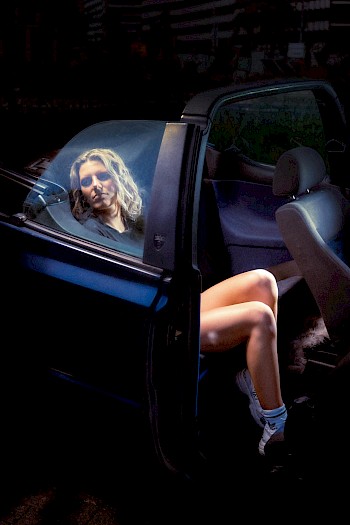 The course was intensive, and we were encouraged to fully immerse ourselves in the academy. We had access to workshops in wood, metal, textiles and printmaking, and were constantly challenged by lecturers to push our ideas further. I eventually graduated with a durational performance where real taxi drivers transported audiences to another location in the city.
One of my proudest moments after graduating was receiving my first residency at BUDA in Belgium. I had been rejected three times before being accepted on the fourth attempt. That experience gave me the time and space to develop a project called FAKE TAXI, in collaboration with theatre maker Rosa Gooij.
From there, the project grew, leading to funding from the Amsterdam Fonds for the Kunst and Mondriaan Fonds, exhibitions in Amsterdam and Düsseldorf, and performances at festivals across the Netherlands.
My artistic practice now uses documentary-style film and performance to explore the boundaries between public and private space, and the shifting dynamics of power, control and desire. I often work in everyday environments to explore social expectations and hierarchies.
More recently, I’ve begun using myself as a hyper-feminine character to explore observation, performance and control, questioning who is aware of being seen and who benefits. In my recent theatre work, Hello World, I explore these ideas further through character and performance.
Looking back, moving abroad to study was a big decision, but I felt well supported with the planning and organisation that got me there. It shifted my mindset and made me realise how much is possible if you commit to an idea. I’ve stayed in Amsterdam ever since, and it still feels like the right place for my practice to evolve. I feel very fortunate for the time and support I had at East Sussex College. The closeness to lecturers and peers created an environment where it was easier to be honest, to experiment, and to really understand how and why I was making work.
At times it was small, precise feedback that pushed me to develop ideas further or refine a piece; at other points it was encouragement to let go, loosen up, and restart when things weren’t working. That balance of structure and freedom has stayed with me. In many ways, the foundation year set the tone for everything that followed, and I’d strongly recommend that experience to anyone unsure of their direction.
Since then, I’ve learnt that maintaining a creative practice requires ongoing curiosity as much as discipline. There have also been challenges along the way - moving to a new country, sustaining a freelance creative career, and balancing financial stability with artistic ambition all require resilience.
Overall, I feel grateful for the journey that began at East Sussex College. It gave me the confidence to take risks and the foundation to build a practice that has taken me across Europe, and now feels like the right moment to reconnect with the UK art scene and see how my work can continue to develop here.
I studied an Art Foundation Diploma at East Sussex College before moving to Amsterdam for university. Since graduating, I’ve exhibited and developed work across Europe including Belgium, the Netherlands and Germany - and now feels like the right time to reconnect with the UK art scene and explore what comes next.